








What is NETD in a Thermal Scope & Why It Matters for Hunting
You are positioned in the early morning mist, awaiting the ideal shot. Your thermal scope detects movement, but the image appears grainy and lacks contrast. Is it a coyote? A feral hog? Uncertainty prevents you from taking the shot—not due to a low-quality device, but because of a critical specification often overlooked by hunters: Noise Equivalent Temperature Difference (NETD). Understanding this single metric can transform hunting experiences from uncertain guesses into confident, precise engagements.
At RIX, our philosophy is rooted in one principle: informed hunters are successful hunters. That is why we claim what NETD means and how it directly enhances field performance today.

What NETD Means in a Thermal Scope: Measuring Thermal Sensitivity
NETD, or Noise Equivalent Temperature Difference, quantifies the sensitivity of a thermal sensor. Specifically, it indicates the smallest temperature difference the sensor can detect and render as a distinguishable element in the image.
Consider auditory acuity: an individual with acute hearing can perceive a whisper in a quiet room, while another may not. Similarly, in thermal imaging, a lower NETD value equates to greater "thermal hearing." The sensor captures finer thermal variations, resulting in higher image clarity and detail.
NETD is measured in millikelvins (mK), with typical specifications expressed as <25 mK or <20 mK. The guiding principle is straightforward: the lower the NETD value, the higher the sensor sensitivity and the superior the image quality.
How Low NETD Transforms Field Performance
While low NETD values may seem like just another technical specification on a datasheet, their real-world impact is undeniable during actual hunting scenarios—whether you're stationed in a blind or navigating through dense terrain.
Penetrating Adverse Weather Conditions
Weather rarely aligns with hunting plans. Rain, fog, snow, and high humidity can significantly degrade thermal imaging by creating a “thermal veil” that reduces contrast between targets and their surroundings. Thermal scopes with higher NETD values tend to struggle in these conditions, producing noisy, low-contrast images that make it difficult to distinguish targets.
However, a low-NETD thermal scope excels under these challenges. Its heightened sensitivity enables it to penetrate atmospheric interference, detecting subtle residual thermal differences and providing a clear, well-defined target outline when other devices may only display indistinct noise.
Enhancing Target Identification Accuracy
Accurate target identification is critical for ethical and effective hunting. A lower NETD dramatically improves image resolution, allowing hunters to differentiate between targets with greater precision. Instead of seeing an ambiguous heat signature, users can discern anatomical features—such as distinguishing a feral hog from livestock or spotting antlers on a buck partially obscured by brush. This level of detail ensures informed, responsible decision-making in the field.
Improving Post-Shot Tracking Capability
Tracking wounded game is one of the most challenging aspects of hunting, especially in conditions where blood trails cool quickly, such as on wet terrain. A low-NETD thermal scope or thermal monocular can be an invaluable tool in these scenarios. Its superior sensitivity enables it to detect faint thermal trails or residual body heat from a downed animal, even against cooler surroundings. This capability can make the critical difference between recovering your game or losing it entirely.
RIX Thermal Scopes: Engineered for Real-World Hunting Challenges
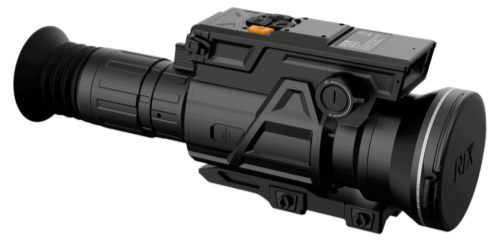
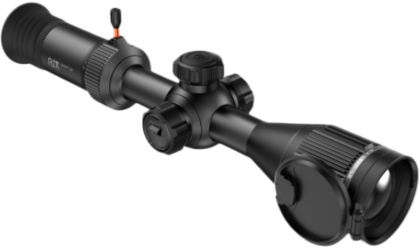
At RIX, we don't design thermal optics for sterile laboratory conditions—we engineer them for the rugged realities hunters face in the field. Exceptional sensor performance isn't an optional upgrade; it's our standard. By prioritizing low NETD (Noise Equivalent Temperature Difference) values, we deliver tangible advantages when precision and clarity matter most.
Product Comparison: Built for Every Hunting Scenario
| RIX Product Series | NETD |
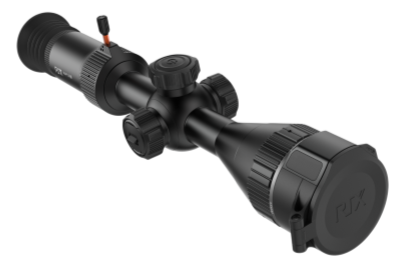
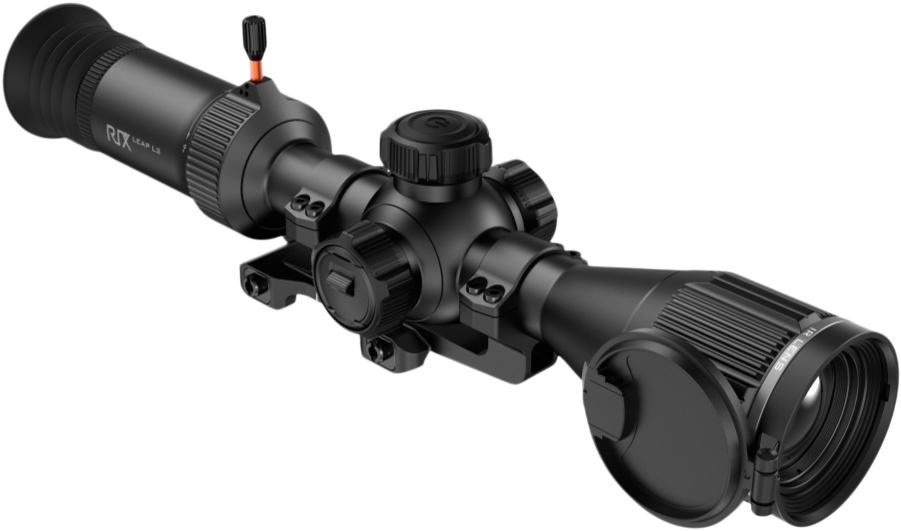
| Thermal Imaging Riflescopes - RIX LEAP | <20mK |
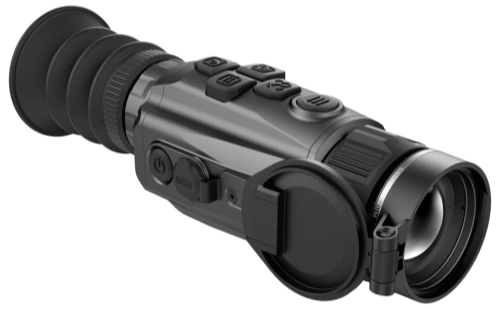
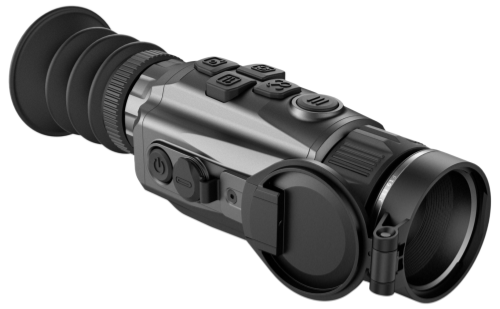
| Thermal Imaging Riflescopes - RIX STORM | <25mK |
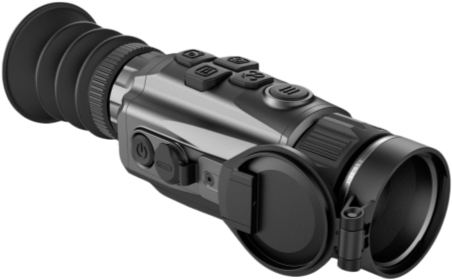
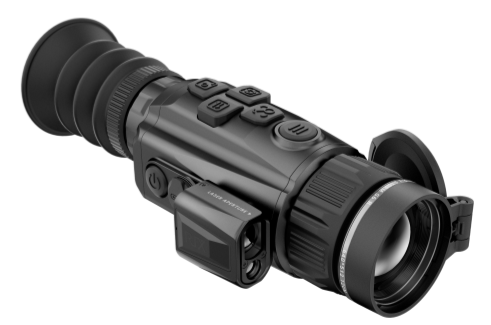
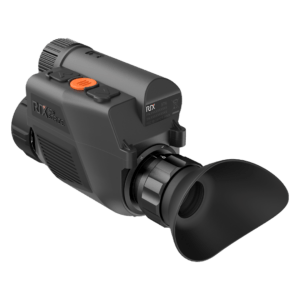
| Thermal Imaging Monoculars - RIX TITAN | <20mK |
Expert Insight: Aligning NETD with Hunting Needs
When choosing a thermal monocular for hunting, focusing solely on resolution can be misleading. Instead, consider the NETD specification, as it directly impacts field performance.
For Serious Hunters:
Hunters operating frequently in adverse environments—such as fog, rain, or open terrain where detecting fine thermal details is critical—should prioritize systems with an NETD of <20 mK, like the RIX LEAP L3R or L6R. The investment pays off through improved success rates and superior imaging performance.

For General Use:
For most hunting scenarios, including scouting with a thermal imaging monocular or engaging targets within 300 yards, a system with an NETD of <25 mK is more than sufficient.
Looking Ahead: Redefining Thermal Imaging Standards
At RIX, NETD is more than just a number on a spec sheet—it’s the foundation of image fidelity. It’s the difference between uncertainty and certainty, between hesitation and confident action.
Pushing the Boundaries of Thermal Sensitivity
We are actively working to advance beyond today’s limits, setting a new benchmark for thermal imaging. Our goal is simple: to provide hunters with the sharpest, most reliable thermal vision—no matter the conditions.
Experience the RIX Advantage
Whether you’re tracking game in dense terrain, engaging targets at long range, or scanning the landscape in adverse weather, RIX thermal optics deliver the clarity and precision you need to succeed.
Explore our full range of high-performance thermal scopes and monoculars at the RIX Shop and discover how superior NETD can elevate your hunting experience.
Comments