








How to Master Your Thermal Rifle Scope in Fog and Rain?
For many dedicated hunters, the best adventures begin long before sunrise. You prepare your gear, check your rifle, study the wind, and step into the stillness of dawn. But nature doesn’t always cooperate. Sometimes a thick blanket of fog covers the ground, or a steady drizzle begins to fall just as you reach your spot. These conditions can drastically reduce the performance of average thermal scopes.
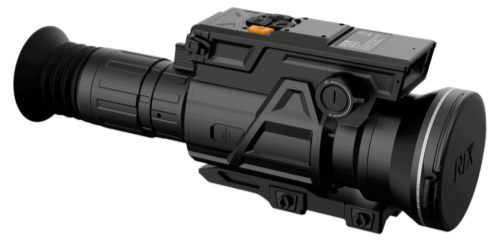
But here’s the truth every serious hunter knows: bad weather doesn’t stop wildlife—so it shouldn’t stop you. And with the right thermal imaging riflescope, it won’t. This expanded guide explains in detail why fog and rain affect thermal optics, how RIX LEAP series riflescopes are engineered to maintain exceptional clarity, and which features you must understand to get the best performance in high-humidity environments.
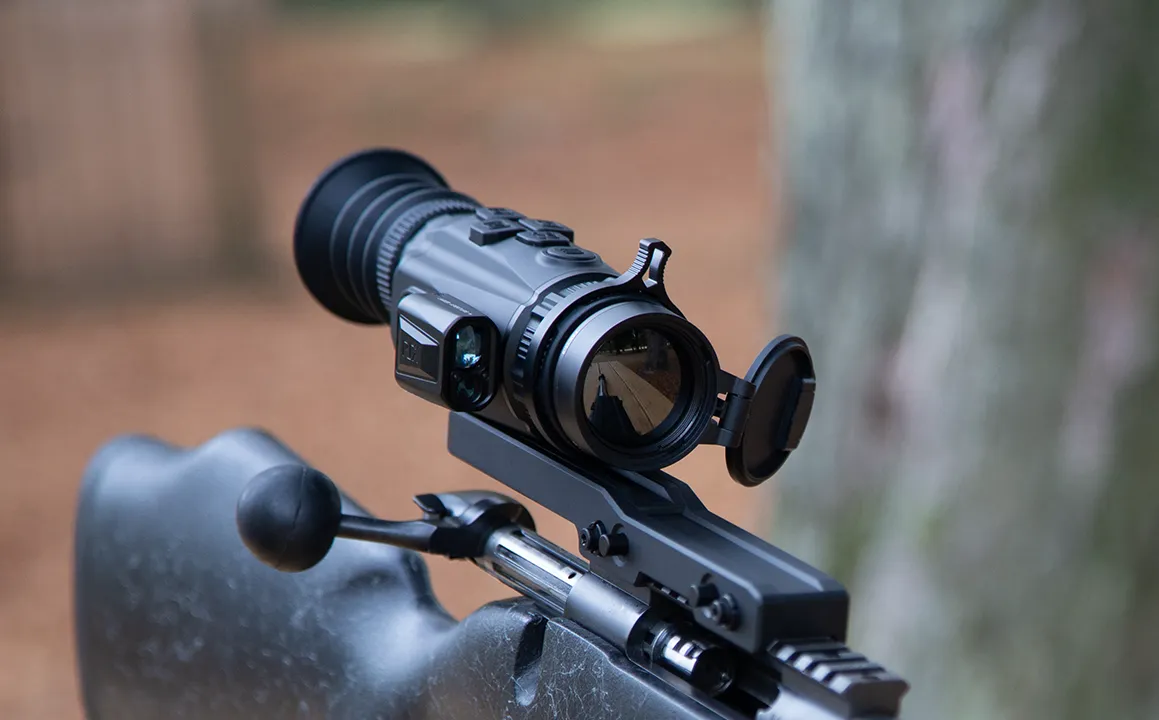
Why Moisture Is the Enemy of Any Thermal Imaging Riflescope
To understand how to overcome weather limitations, you must first understand what causes them.
Thermal imaging riflescopes detect infrared radiation (IR)—heat—emitted by every object and living creature. Under normal conditions, this heat travels from the target to your thermal sensor with relatively little interference. But when fog, rain, or mist is present, the air becomes filled with countless microscopic water droplets.
These droplets:
- Absorb IR energy
- Scatter IR waves
- Reduce thermal contrast
- Create “noise” in the image
This results in an image that looks flat, blurry, and low contrast.
Even experienced hunters can struggle in these situations if their thermal riflescope lacks sufficient sensitivity or processing intelligence.
This is where premium engineering and advanced sensing technologies offer a critical advantage.
Why Sensor Sensitivity (NETD) Determines Whether You Can See in Fog and Rain
The single most important specification when hunting in moisture-heavy environments is NETD (Noise Equivalent Temperature Difference).
Simply put:
Lower NETD = Higher Sensitivity = Clearer Image in Fog/Rain
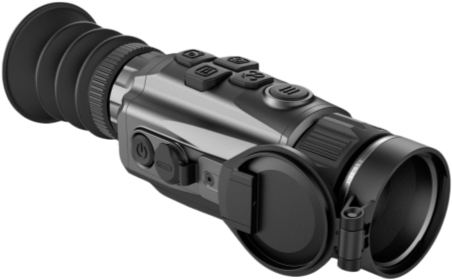
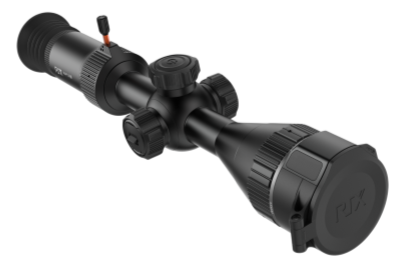
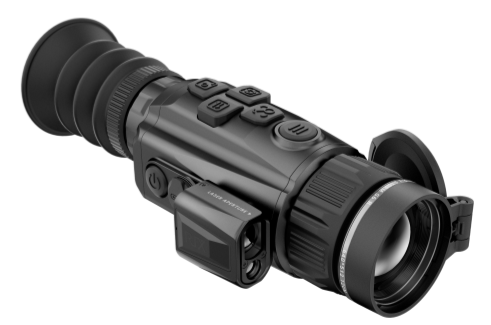
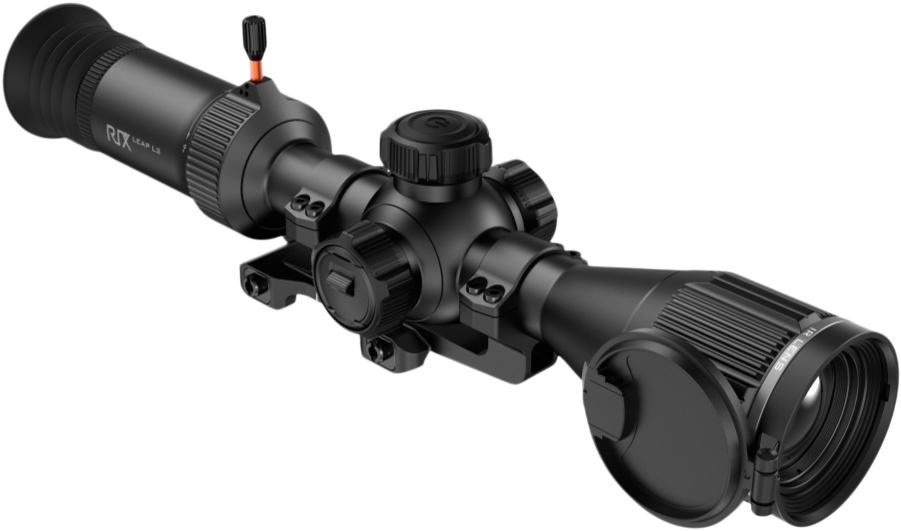
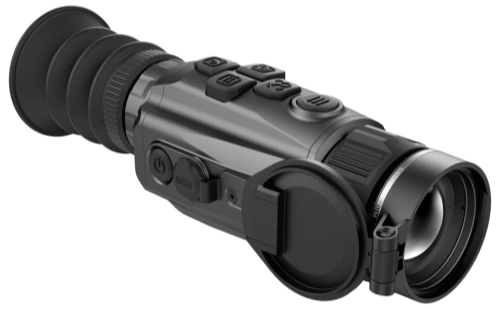
A sensor with a NETD <20mK, like that used in the RIX LEAP L6R, can detect incredibly subtle temperature differences—even those that remain after fog absorbs a significant amount of IR energy.
With a low-NETD thermal optic, you benefit from:
- More defined animal outlines
- Sharper thermal contrast
- Better visibility through fog
- Improved detection range in rain
- Cleaner differentiation between target and background
In wet environments, many mid-range thermal scopes become nearly unusable. The LEAP Series (NETD <20mK) is engineered specifically for these challenging conditions, allowing hunters to maintain the clarity needed for ethical decision-making.
Smart Imaging Modes: Unlocking the Full Power of Your RIX Thermal Rifle Scope
RIX integrates a suite of intelligent imaging modes that automatically adjust the scope to shifting environmental conditions. These modes are often the difference between a blurry, unusable picture and a crisp, high-contrast image that lets you continue hunting when others have to quit.
Sun Mode: Stability During Rapid Temperature Shifts
Early mornings often create dramatic temperature changes as sunlight begins burning off fog and moisture. This sudden increase in ambient temperature can cause sensor overload, resulting in image washout.
Sun Mode automatically:
- Adjusts sensor sensitivity
- Optimizes gain levels
- Stabilizes thermal contrast
- Prevents “white-out” conditions
This ensures the scope stays accurate and readable even during dramatic temperature transitions.
Rain Mode: Cutting Through Visual Noise During Wet Conditions
Rain Mode is one of RIX’s most powerful technologies for wet-weather hunting.
It uses a specialized algorithm that:
- Filters out bright thermal artifacts created by raindrops
- Reduces the scattering effects caused by moisture
- Enhances the heat core of the animal
- Improves target outline visibility
- Reinforces edge definition
The result is a thermal image with significantly better contrast and recognition—ideal for continuing a hunt during rain, light snow, or heavy mist.
RIX LEAP Series Weather Performance Summary
| Feature | Benefit in Fog / Rain |
| NETD <20mK | Ultra-high sensitivity for maximum clarity in low-contrast conditions |
| Rain Mode | Removes noise caused by water droplets; enhances target visibility |
| Sun Mode | Stabilizes image during rapid temperature transitions |
After discussing imaging performance and environmental adaptability, hunters often overlook an equally critical factor—the durability of the device itself. No matter how advanced the thermal imaging technology is, if the scope cannot withstand the physical challenges of the field, even the clearest image may become meaningless. Therefore, when choosing a thermal rifle scope, in addition to focusing on image clarity and moisture resilience, durability is also a key factor in ensuring a successful hunt.
Durability Matters: Protecting Your Heat-Vision Scope from the Elements
In the field, weather is only part of the challenge. A true hunting optic must withstand physical abuse: recoil, impacts, slips, mud, and unpredictable terrain.
Rugged Body Design
RIX constructs LEAP Series scopes using premium aluminum alloy for exceptional durability.
They offer:
- IP67 waterproofing
- Dust-tight sealing
- 1000g shock resistance
- Recoil stability even on high-caliber rifles
Whether you’re hiking through soaked grass or climbing slippery ground, the scope stays protected and holds its zero.
Reliable Power: The Advantage of 18650 Batteries
Rather than forcing hunters to rely on proprietary battery packs, RIX uses widely available 18650 lithium batteries.
Advantages include:
- Up to 7 hours of runtime
- Easy swaps with wet or gloved hands
- Readily available replacements
- Stable performance in cold and wet weather
This ensures that a dead battery never interrupts a hunt—critical in remote environments or extended nighttime outings.
Weather Should Never Stop a Prepared Hunter
Great hunts happen in unpredictable conditions.
Thick fog, morning mist, and persistent rain may reduce visibility—but with the right thermal imaging technology, they don’t have to reduce your chances of success.
The RIX LEAP Series gives hunters:
- Industry-leading sensitivity (NETD <20mK )
- Advanced environmental imaging modes
- Rugged durability
- Continuous optical zoom
- Long-lasting and field-friendly power
These features combine to create one of the most capable weather-ready thermal rifle scopes available today.
When other hunters pack up and call it quits, RIX users push forward—because they can still see clearly.
If you’re ready to track, identify, and hunt confidently in any weather condition, discover how RIX thermal optics can transform your next outdoor adventure.
FAQ
| Question | Answer |
| Do thermal rifle scopes work in fog? | Yes, they do, but performance varies based on sensor sensitivity and image processing. Fog absorbs and scatters infrared radiation, which reduces image contrast. |
| Why does fog or rain reduce thermal imaging clarity? | Moisture (tiny water droplets) absorbs and scatters heat energy before it reaches your sensor, causing the target's heat signature to blend into the background. |
| Can rain damage my thermal rifle scope? | Only if the device lacks proper waterproofing. |
| Do thermal scopes still work in high humidity? | Yes, but high humidity reduces temperature contrast. |
| Can I hunt ethically with a thermal scope in fog or rain? | Absolutely—provided your optic offers sufficient clarity for positive identification. |
Keywords
thermal imaging riflescope, thermal rifle scope, thermal scope for foggy/rainy condition, weather-ready thermal optic, low NETD thermal scope, RIX LEAP series
Comments