







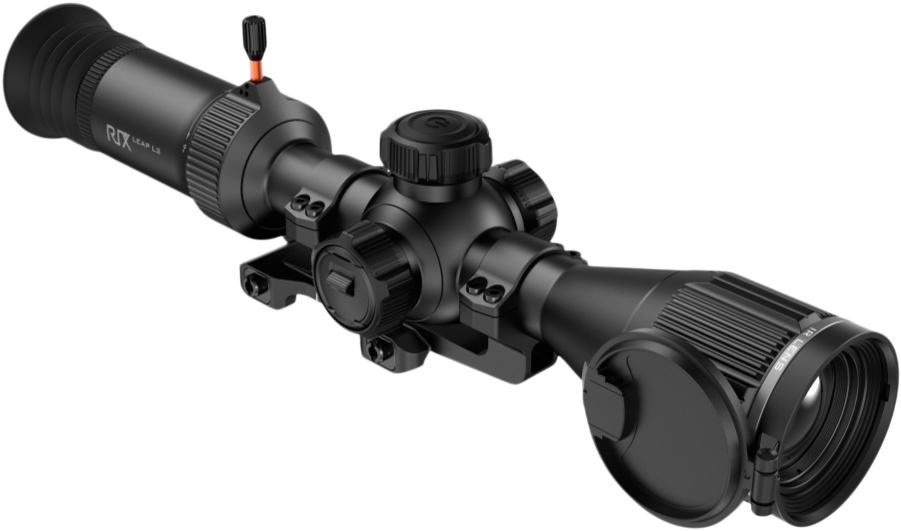
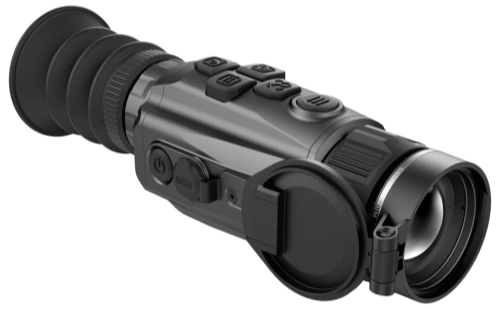
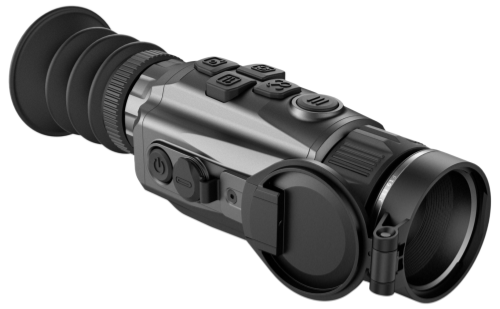

RIX STORM Thermal Imaging Riflescope Buying Guide for Hunters & Outdoors
The call of the wild doesn't stop when the sun goes down. For serious hunters, nighttime offers a unique set of challenges and opportunities. To succeed, you need reliable gear that can see through darkness, fog, and brush—you need a thermal riflescope.
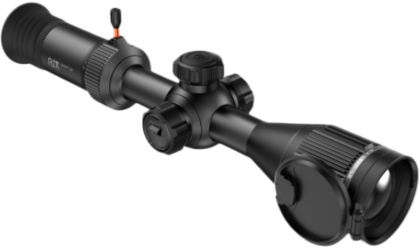
At RIX, we understand that you need more than just a tool; you need a partner that simplifies the hunt without breaking the bank. That’s why we engineered the RIX STORM series of thermal imaging riflescopes. This guide will walk you through choosing the perfect STORM model, whether you’re looking for basic reliability or extreme precision in your next thermal scope.

Why the RIX STORM Series Redefines the Thermal Imaging Riflescope Experience
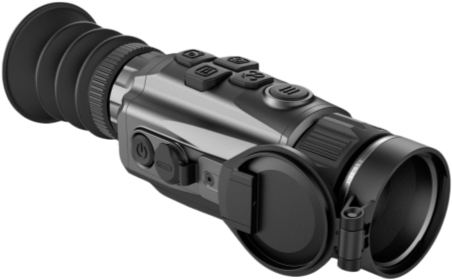
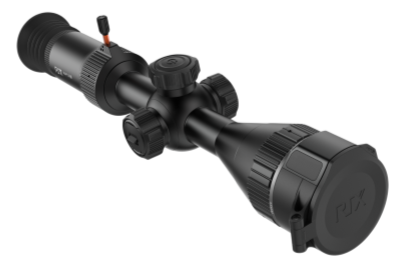
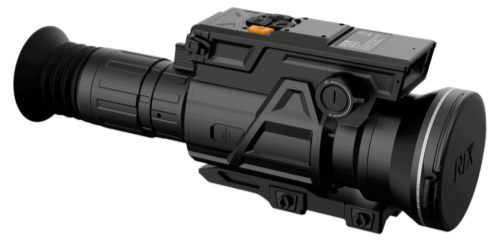
The RIX STORM series was designed specifically for the discerning hunter in the mid-to-low-end market who demands performance and ease of use from a thermal imaging riflescope. Our core design philosophy centers on two major advantages: compact form factor and an intuitively simple operating system.
Many hunters struggle with bulky scopes that throw off the rifle’s balance. The STORM series combats this by offering a lightweight, streamlined package. A lighter thermal riflescope means less fatigue during long nights of scanning and easier handling when the moment of truth arrives.
Furthermore, we’ve ensured the new operating system is quick and responsive, allowing you to change settings, adjust palettes, and zero the thermal scope without fumbling in the dark. Our goal is to keep your eyes on the target, not on confusing menus.
Step 1: Integrated Laser Rangefinder (LRF) — Yes or No for Your Thermal Scope?
This is arguably the most crucial decision you will make when selecting your thermal riflescope. Do you need a laser rangefinder (LRF) built directly into your optic?
STORM LRF Models (S3R & S6R): Precision is Power for Your Thermal Riflescope
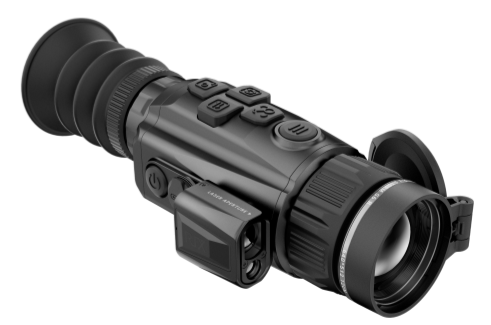
For hunters engaging targets at medium to long ranges, knowing the exact distance is non-negotiable. Our STORM 'R' models (S3R and S6R) feature an integrated Laser Rangefinder (LRF). This capability provides real-time, accurate distance readings, dramatically improving first-shot hit probability by eliminating guesswork. This is the ideal choice for open-field coyote hunting where shots might stretch beyond 200 yards, requiring the precision only an integrated thermal riflescope can offer.
STORM Base Models (S1, S2, S3, S6): Value and Simplicity in a Thermal Scope
If your hunting takes place in dense woods, on smaller properties, or at shorter ranges, a dedicated LRF might be overkill for your thermal scope. The standard STORM models (S1, S2, S3, S6) focus on core thermal performance, keeping the unit lighter and more affordable. If you primarily use a thermal monocular for scanning and confirm distances with a separate handheld unit, these excellent thermal riflescopes offer incredible performance value.
Step 2: Unpacking the Sensor Resolution (256 vs.384 vs. 640) in RIX Thermal Riflescopes
Once you’ve settled on the LRF feature, the next choice for your thermal imaging riflescope is sensor resolution: 256×192, 384×288 or 640×512. All resolutions utilize a small 12µm Pixel Pitch, resulting in high-fidelity image output for RIX thermal riflescopes.
- 256×192 Resolution (S1, S2): This entry-level resolution is ideal for shorter-range hunting or for hunters on a budget. It provides sufficient detail for detecting large animals at close to moderate distances. While not as crisp as higher resolutions, it remains effective for general tracking and spotting in most environments.
- 384×288 Resolution (S3, S3R): This resolution provides excellent detail for standard hunting scenarios. It’s highly effective for detecting and identifying hogs or deer at typical hunting distances (up to a few hundred yards). It offers the best bang for your buck, balancing performance and cost in a quality thermal scope.
- 640×512 Resolution (S6, S6R): This is our high-performance option. A higher Detector Resolution means a noticeably wider Field of View (FOV) and allows you to use more digital magnification before the image pixelates. If you need to scan a vast field or require maximum detail for positive identification, the 640-sensor thermal imaging riflescope is the superior choice.
While the 640 resolution provides a clearer image, never underestimate the power of a modern 384 sensor with a low NETD value. The STORM series sensors all boast a high sensitivity (NETD <25mK), which means they can capture incredibly fine thermal distinctions, delivering the detailed images you need for target identification, regardless of the resolution of your thermal riflescope.
Step 3: Key Features That Matter in the Field
Beyond resolution and the LRF, the STORM thermal riflescope shares critical features designed to keep you reliable in the woods:
- High Recoil Rating: Every RIX STORM thermal scope is constructed with a high-strength aluminum alloy housing and can withstand severe recoil shock. You can mount these confidently on your favorite hunting rifle without worrying about losing your zero.
- IP67 Waterproofing: The IP Rating of IP67 ensures the thermal riflescope is fully dust-tight and submersible in up to 1 meter of water for 30 minutes. Fog, heavy rain, or an accidental drop in the mud won't end your hunt.
- Quick Focus: The optical design prioritizes fast, fine focus adjustment, ensuring you get a razor-sharp image of your target, even when moving from short to long ranges quickly.
Your Partner for Nighttime Success
Choosing the right thermal riflescope is a personal decision based on your budget and hunting needs. Whether you opt for the simplicity and affordability of a standard STORM model or the long-range precision of an LRF version, you are investing in a compact, highly reliable thermal scope solution.
We built the STORM series to be your trusted partner in the field—tough, intuitive, and always delivering a clear picture when you need it most.
Ready to see the unseen? Explore the full range of thermal imaging riflescopes and find your perfect match today: View All RIX Thermal Riflescopes or visit RIX Optics.
Frequently Asked Questions (FAQ)
| Question | Answer |
| Can the RIX STORM thermal imaging riflescope see through fog or heavy rain? | Yes. Thermal imaging's primary advantage is its ability to see heat signatures (infrared radiation), making it significantly less affected by poor atmospheric conditions (fog/rain) compared to traditional night vision or optical scopes. While very heavy conditions may cause slight degradation, the low NETD sensitivity of the STORM series helps detect subtle heat differences. |
| Are the RIX STORM thermal riflescopes durable enough for high-recoil rifles? | Absolutely. These scopes are rigorously tested to withstand the shock of powerful calibers, guaranteeing they maintain their zero and performance even on rifles with significant kick. |
| How long will the battery last on a RIX STORM thermal scope during an all-night hunt? | Actual operating time depends on the specific STORM model and usage (e.g., constant recording, LRF use). RIX scopes are designed for endurance via power efficiency. They utilize easily replaceable, high-capacity 18650 Battery cells (where applicable), allowing hunters to carry and quickly swap spares for maximum runtime. |
Primary Keywords: thermal riflescope, thermal scope, thermal monocular, thermal imaging riflescope, RIX STORM series review, best thermal scope for coyote hunting, thermal scope with LRF, affordable thermal riflescope, thermal scope buying guide, 12µm pixel pitch, recoil rating, night hunting gear, IP67 waterproof, thermal imager
Comments