








A Practical Buyer’s Guide to Thermal Monoculars
The sun goes down, but the hunt is just beginning. For the modern predator hunter, the darkness is no longer an obstacle—it is an advantage. However, to truly own the night, you need more than just a basic optic; you need a tool that integrates into your movement and enhances your senses. Choosing a thermal monocular is one of the most significant investments you will make in your hunting kit.
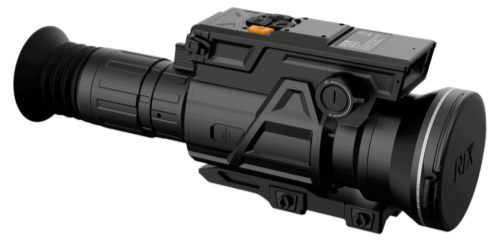
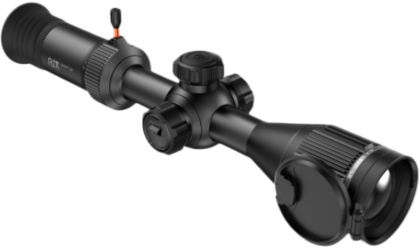
In this comprehensive thermal monocular buyer's guide, we will dive deep into the technology that powers the RIX STRIDE series and explain why "hands-free" is the future of night scouting.
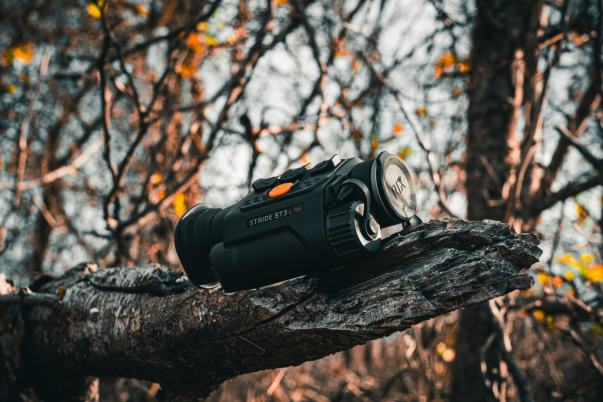
Why a Thermal Monocular is Your Most Critical Hunting Tool
Many hunters ask us: "Why should I choose a thermal monocular over traditional digital night vision?" The answer lies in physics. Night vision relies on light amplification, meaning a coyote sitting in a dark treeline might still be invisible. Thermal imaging detects heat signatures, making that same coyote glow like a neon sign against the cool background of the woods.
At RIX, we know that successful hunting requires stealth. Using a thermal device allows you to scan the environment without emitting any visible light that could spook sensitive game. Whether you are managing destructive feral hogs on your land or calling in vigilant songdogs, a thermal monocular allows you to stay hidden while seeing everything.
Key Technical Specs in a Thermal Monocular Buyer’s Guide
When you start comparing different brands, the spec sheet can feel overwhelming. To find the best thermal monocular, you need to focus on the numbers that actually impact your vision in the field.
Sensor Resolution and Pixel Pitch
The heart of the optic is the sensor. A higher resolution, such as the 640×512 sensor found in the STRIDE ST6 Lite, provides a much larger number of pixels, resulting in a crisper image and a wider field of view. Combined with a 12µm pixel pitch, these sensors allow for better digital zoom capabilities without the image becoming overly pixelated.
NETD (Noise Equivalent Temperature Difference, Thermal Sensitivity)
NETD measures how well the sensor can distinguish between tiny temperature differences. Our STRIDE series features NETD <20mK. Why does this matter? On a humid, "washed-out" night where everything is the same temperature, a lower NETD ensures you can still see the physical contours of the landscape and the fine details of an animal’s coat.
Refresh Rate (Hz)
Never settle for anything less than 50Hz. A lower refresh rate causes "ghosting" or lag when you move the device. Because we designed the STRIDE for active movement, our 50Hz refresh rate ensures that your view remains fluid, even when you are scanning from left to right.
The Game-Changing Benefits of a Head-Mounted Thermal Monocular
Holding a monocular up to your eyes for hours on end leads to “arm pump” and severe neck strain. We solved this problem by creating a high-performance head-mounted thermal monocular.
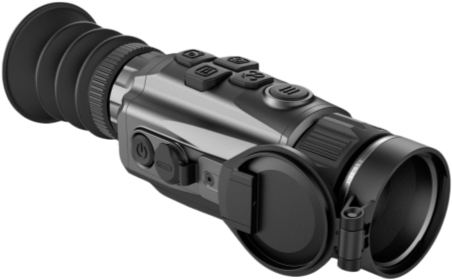
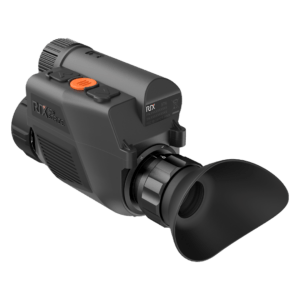
The RIX STRIDE series is engineered to be worn. This delivers a hands-free thermal monocular experience that changes everything.:
- Safety: You can navigate rocky terrain or thick timber while keeping your hands free for balance.
- Efficiency: You can scan for eyes while simultaneously using a hand-held caller or adjusting your shooting sticks.
- Stealth: Transitioning from scanning to shooting is silent. Instead of dropping a handheld unit on a lanyard (which can clack against your chest), you simply flip the STRIDE up and shoulder your rifle.
RIX STRIDE ST6 Lite vs. ST3 Lite: Which Thermal Monocular Models Fit Your Style?
Choosing between our two flagship thermal monocular models depends on your typical hunting environment.
| Technical Specification | STRIDE ST3 Lite | STRIDE ST6 Lite |
| Sensor Resolution | 384×288 | 640×512 |
| Objective Lens | 15mm | 25mm |
| Detection Range | 852 Yards | 1423 Yards |
| Display Type | 1024×768 OLED | 1024×768 OLED |
Why a Lightweight Thermal Monocular Improves Long-Distance Roving
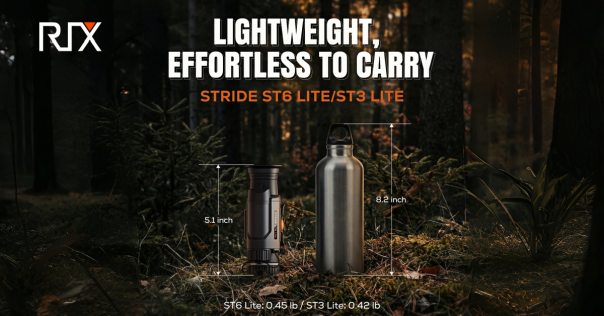
In the world of night hunting, "ounces equal pounds, and pounds equal pain." If your gear is too heavy, you will stop using it. This is why we prioritized a lightweight thermal monocular design.
The STRIDE weighs approximately 0.45 lbs (205g). For comparison, that is about the weight of a smartphone. When head-mounted, this lightweight profile prevents the helmet from pulling forward, which is a common complaint with heavier competitor units.
Power Management and the 18650 Thermal Monocular Advantage
There is nothing worse than having your gear die right as a trophy boar steps into the light. Many competitors use internal, non-removable batteries. At RIX, we believe that it is a mistake for serious hunters.
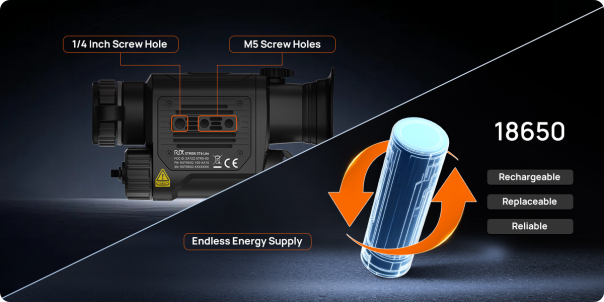
Every STRIDE thermal monocular is powered by a replaceable 18650 battery (70mm).
Field-Proven Tips for Operating Your Hands-Free Thermal Monocular
To help you get the most out of your RIX optic, our team of experts has compiled these "RIXpert" field tips:
Multi-purpose mounting interface: STRIDE supports both M5 and 1/4-inch screw mounts, enabling not only head-mounted use but also vehicle-mounted use.
Diopter Focus: Set your diopter (the ring side of the eyepiece) by looking at the menu icons until they are sharp.
Two-Eye Coordination: When using a hands-free thermal monocular, keep your non-optic eye open. It takes a little practice, but your brain will eventually "overlay" the thermal image onto your natural vision, giving you incredible depth perception in the dark.
Elevate Your Night Hunt with RIX
The RIX STRIDE series isn't just another entry in a thermal monocular buyer's guide; it is a specialized tool designed by hunters, for hunters. By focusing on a lightweight, 18650-powered, and head-mountable design, we have removed the barriers that used to make night scouting a chore.
Whether you are a professional predator controller or a weekend enthusiast, the STRIDE ST6 Lite and ST3 Lite offer the performance you need at a price that makes sense. We invite you to experience the RIX difference—where technical innovation meets real-world durability.
Comments