








How to choose right thermal monocular?
In the quiet darkness of a midnight hunt, the world changes. What was a clear path during the day becomes a wall of shadows and rustling leaves. For the modern predator hunter or land manager, traditional optics simply aren't enough. You need the ability to cut through the darkness and see the heat signatures that nature tries to hide. This is where a high-quality thermal monocular becomes your most valuable asset.
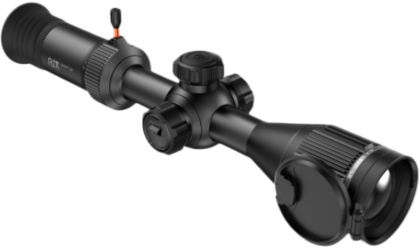
However, the market is flooded with options. Some are too heavy, others have poor battery life, and many are so complicated they require a manual just to turn on. At RIX, we believe gear should work for you, not the other way around. In this guide, we’ll walk you through how to choose the right thermal imaging monocular and why our STRIDE ST6 Lite and ST3 Lite are setting new standards for hunters.
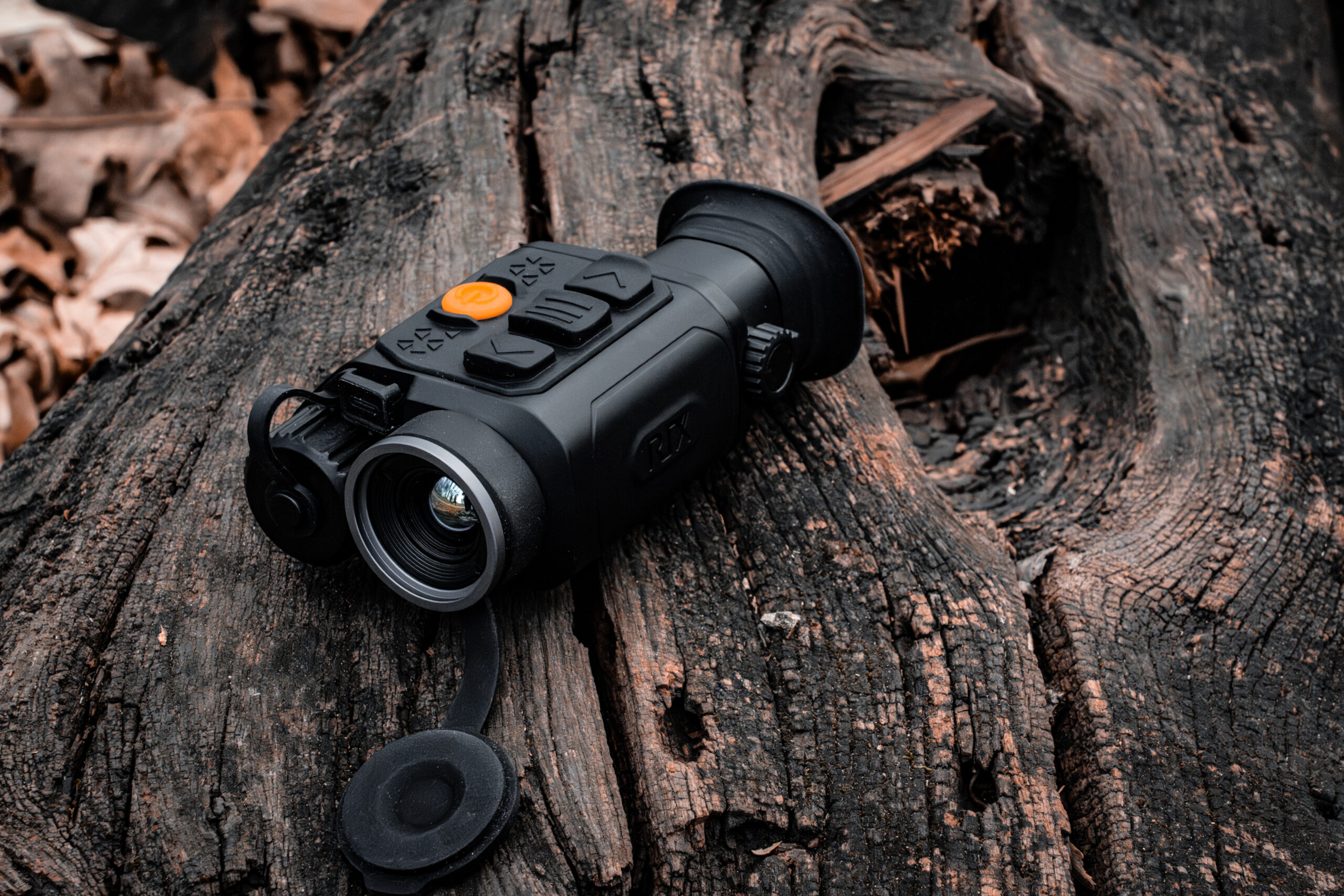
What Makes a Great Thermal Monocular?
Before diving into specific models, it is essential to understand the "guts" of the technology. Choosing a monocular based on price alone is a mistake; you need to understand how the sensor and lens interact to give you a clear image.
Sensor Resolution: The 640 vs. 384 Debate
The sensor is the brain of your thermal monocular. Resolution determines how many pixels are used to create the heat map.
- 640×512 Sensors: Featured in our STRIDE ST6 Lite, these sensors provide four times the detail of entry-level units. This isn't just about "pretty pictures"; it’s about identification.
- 384×288 Sensors: Found in the STRIDE ST3 Lite, these are the workhorses of the industry. They offer excellent clarity for short to mid-range scanning (up to 200-300 yards) and are significantly more budget-friendly.
NETD and Thermal Sensitivity
You will often see the term "NETD" followed by a number like <20mK. This stands for Noise Equivalent Temperature Difference. In simple terms, it measures how well the sensor can distinguish between two very similar temperatures. On a humid, "muggy" night where everything is nearly the same temperature, a sensor with <20mK sensitivity—like those in the STRIDE series—will still show a crisp outline of a target, whereas lower-quality sensors will show a blurry, grey mess.
Why a Lightweight Thermal Monocular Wins?
Many manufacturers focus so much on the sensor that they forget about the person holding the device. If a thermal imaging monocular is heavy or poorly balanced, your arm will fatigue within twenty minutes of scanning.
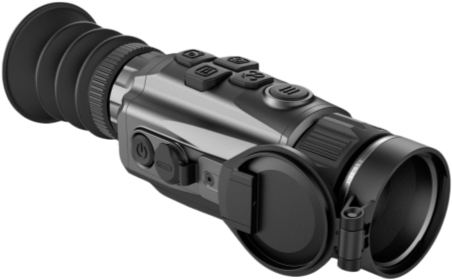
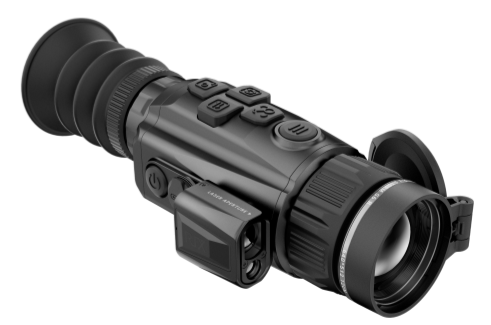
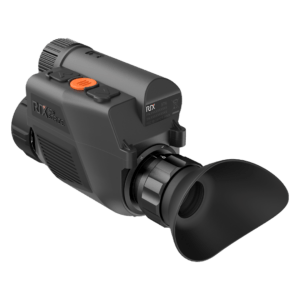
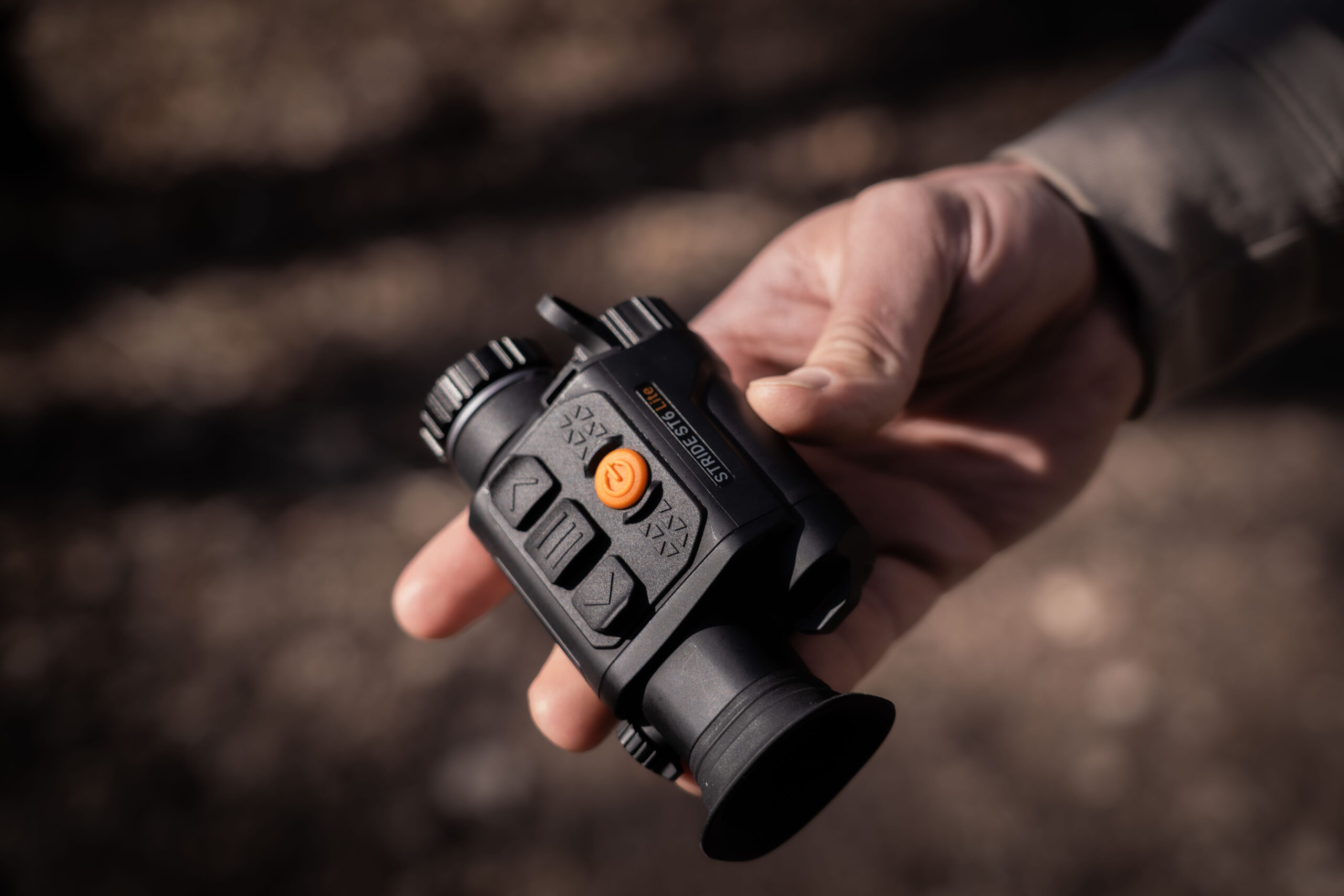
We designed the STRIDE series with a vertical, "Lite" form factor. Weighing only 0.42lb /190g (STRIDE ST3 Lite), it is lighter than most tablets and many smartphones. This design is a deliberate design choice: it aligns with the natural grip of your hand, allowing you to scan for hours without the wrist strain common with horizontal, "brick-style" units.
From Handheld to Vehicle-Mounted
One of the most frequent questions we get is: "How can I cover more ground without walking all night?" The answer lies in the STRIDE’s multi-functional design.
Rapid Scanning with a Thermal Imaging Monocular
As a handheld unit, the STRIDE is built for the move. Whether you are stalking through a creek bottom or checking the perimeter of a sheep pen, its compact size means it fits in a jacket pocket. The 50Hz refresh rate ensures that as you pan across a field, the image remains smooth and fluid, not choppy. This is critical for spotting the fast, erratic movement of a hog or a rabbit.
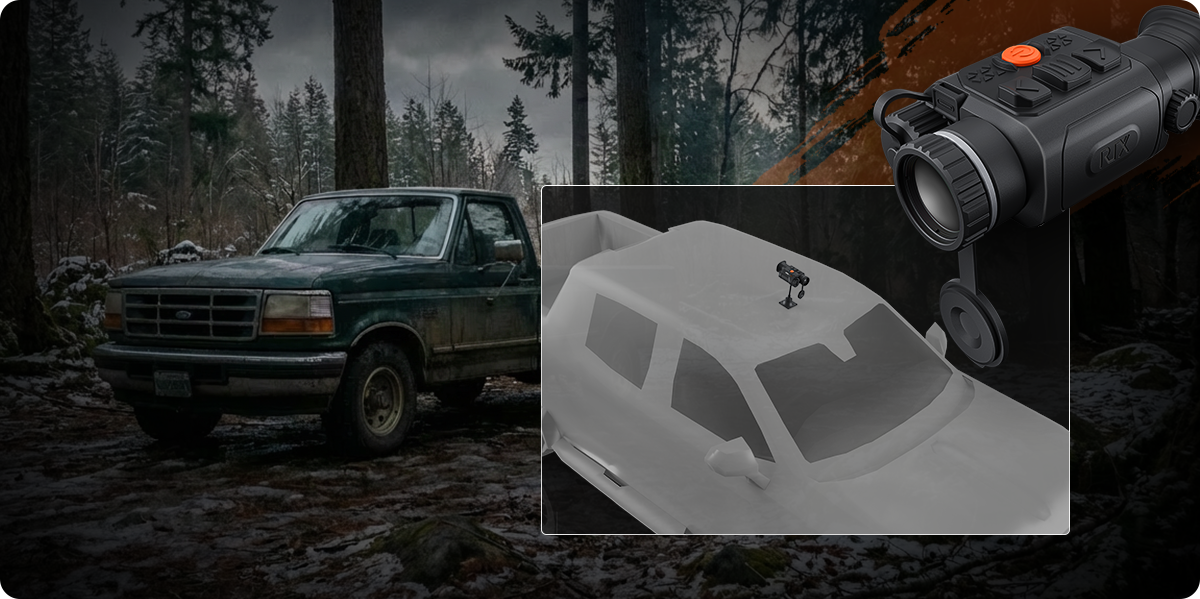
Vehicle-Mounted Mode: Transforming Your Truck into a Thermal Scouting Hub
This is where RIX separates itself from the competition. We know that many American hunters manage thousands of acres. Walking that distance isn't always feasible.
The STRIDE series features a dedicated Vehicle-Mounted Mode. By using the M5 screw, you can mount the monocular to a window clip or a roof mount and feed the live thermal video directly to a tablet or screen inside your truck.
- Scout in Comfort: Stay warm and dry while scanning large crop fields.
- Team Hunting: Your passenger can act as the "spotter," watching the screen while you drive, making for a much more efficient predator control operation.
- Real-Time Feedback: Seeing the thermal feed on a larger screen makes it nearly impossible for a heat signature to go unnoticed.
Reliable Power Design for Your Thermal Monocular:
There is nothing more frustrating than having your gear die right as the action starts. Many thermal units use built-in batteries that, once dead, require hours of charging.
We took a different approach. The STRIDE series utilizes the 18650 battery system. These batteries are inexpensive, widely available, and, most importantly, swappable.
Flip-to-Sleep Function: The STRIDE includes an intelligent sensor that puts the device into sleep mode when it’s hung vertically or tilted away from the eye.
STRIDE ST6 Lite vs. ST3 Lite Thermal Monocular
| Technical Specification | STRIDE ST3 Lite | STRIDE ST6 Lite |
| Sensor Resolution | 384 × 288, 12µm | 640 × 512, 12µm |
| NETD | < 20mK | < 20mK |
| Objective Lens | 15mm / F1.0 | 25mm / F1.0 |
| Detection Range | 780m / 852yd | 1300m / 1423yd |
| Display Type | 1024×768 OLED | 1024×768 OLED |
| Weight | 0.42 lb / 190 g | 0.45 lb / 205 g |
| Internal Storage | 32 GB | 32 GB |
RIXpert Insight: Why Image Quality is Just the Beginning
At RIX, we often say that "the best thermal is the one you have with you." The STRIDE ST6 Lite isn't just a piece of tech; it's a tool designed to endure. With an IP67 waterproof rating, it can handle a sudden downpour or a drop into a muddy puddle. We didn't just build a camera; we built a companion for the rugged outdoors.
Final Words
Choosing a thermal monocular is about more than just reading a spec sheet. It's about how the device feels at 2:00 AM when you've been scanning for six hours. The STRIDE ST6 Lite and ST3 Lite provide the perfect intersection of professional-grade thermal imaging and user-centric design. From its feather-light weight to its innovative vehicle-mounted capabilities, the STRIDE series is built for the way you hunt.
Ready to buy right thermal monocular?
Comments