









More Than Pixels: Why Lens Aperture Matters In Thermal Scopes
In low-light or high-humidity conditions, it can be challenging to distinguish between similar heat signatures in the field. A thermal scope with a high-performance lens aperture ensures you see the sharp details necessary for confident target identification.
While numerous hunters solely focus on sensor resolution, there's another crucial element that determines what you see: the lens aperture. At RIX, we design thermal optics with a focus on achieving an optimal balance between lens aperture, sensor performance, and image processing, ensuring superior image quality in all conditions. Today, we're revealing the reasons why the lens aperture, or F-number, is one of the most vital specifications for thermal scopes.
What Exactly is Lens Aperture (F-Number)?
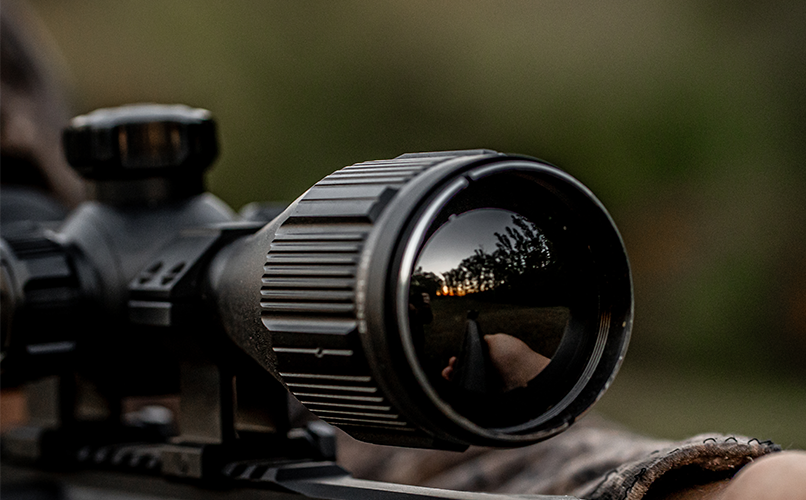
Think of a thermal scope's lens aperture as the pupil of your eye: in low-light environments, your pupils expand to collect more temperature radiation. Similarly, a thermal lens with a wider aperture (lower F-number) enhances its temperature radiation capturing capability, allowing the sensor to process more thermal data and convert it into a visible image.
The aperture size is denoted by an "F-number" (e.g., F1.2, F1.0, F0.9). Here's the key point: The lower the F-number, the wider the aperture, and the greater the temperature radiation level provided to the sensor.
At RIX, we believe that image quality in thermal scopes is not defined by a single factor but rather by the synergy of key components. Today, we're revealing the reasons why the lens aperture, or F-number, is one of the most significant specifications for thermal scopes.
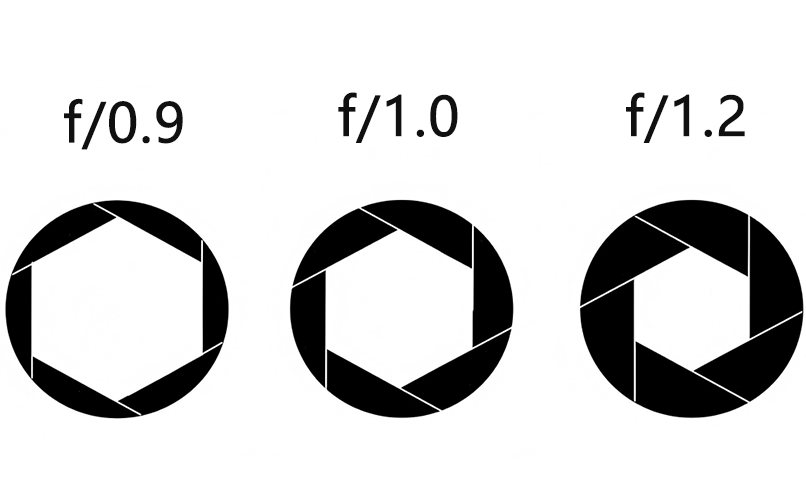
The Evolution of Lens Apertures: From F2.0 to F0.9
Over the years, lens technology in thermal optics has witnessed remarkable progress. Each advancement has enabled hunters to obtain a clearer view of the nocturnal landscape.
The Early Stages (F2.0 - F1.5)
These early apertures served their purpose, yet they faced challenges in low-contrast scenarios. Images frequently appeared dim, and crucial details essential for target identification were prone to being lost, particularly at a distance.
The Industry's Gold Standard (F1.2 - F1.0)
For an extended period, the F1.0 lens emerged as the gold standard for high-quality thermal optics. It brought about a substantial improvement, offering the performance and clarity that numerous hunters rely on today. The majority of thermal scopes available on the market are built upon this reliable and solid standard.
The RIX Edge (F0.9): The New Clarity Benchmark
We were not content with the existing standard. Our aim was to provide hunters with an even clearer advantage. Through our engineering efforts, we developed the F0.9 lens. Although the numerical difference may seem minor, the performance gap is significant. An F0.9 lens captures over 20% more temperature radiation than an F1.0 lens, significantly enhancing the sensor's ability to process fine details. This improvement is particularly critical in low-contrast scenarios, such as detecting subtle heat variations at greater distances or during adverse weather conditions.
How an F0.9 Lens Enhances the Hunting Experience
More data is valuable, but what does it truly signify when you're out in the field?
- Sharper Details and Enhanced Target Recognition: By capturing 20% more thermal radiation, the F0.9 lens provides the processor with richer data, enabling it to resolve finer details and deliver a brighter, higher-contrast image. This allows you to accurately distinguish between similar-sized animals, such as coyotes and foxes, or clearly identify antler tines and anatomical features like muscle contours at extended distances, ensuring ethical and precise shot placement.
- Superior Performance in Adverse Weather: Environmental factors such as fog, high humidity, and rain reduce temperature contrast, making it harder for thermal scopes to differentiate objects. The wider aperture of the F0.9 lens compensates by capturing more subtle temperature radiation variations, enabling the processor to maintain a clear and detailed image even in challenging conditions.
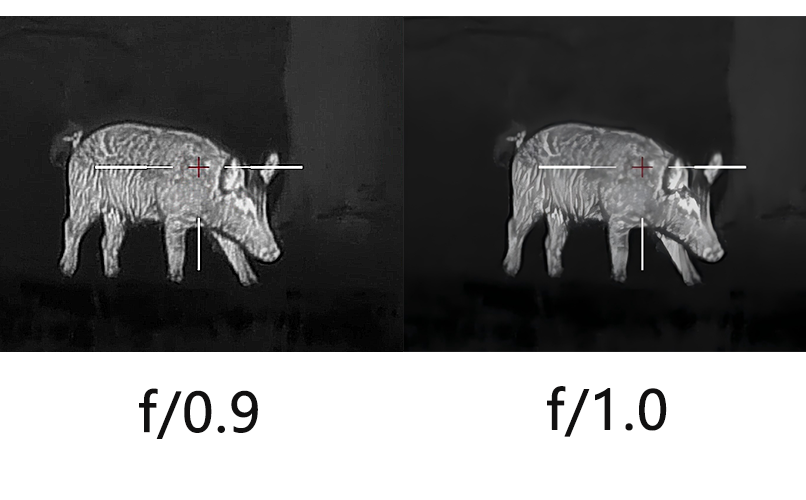
RIXpert Insight: Why We Use F0.9 Lenses
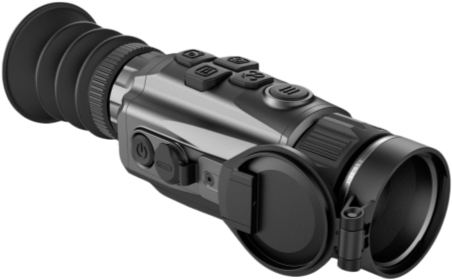
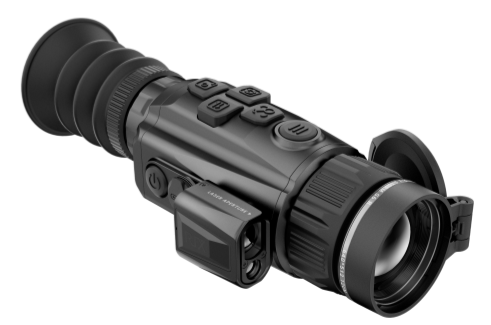
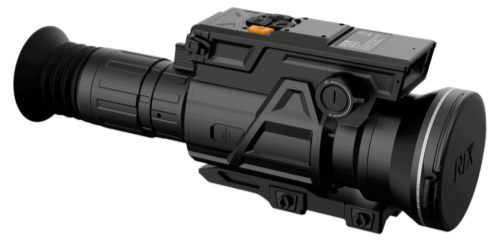
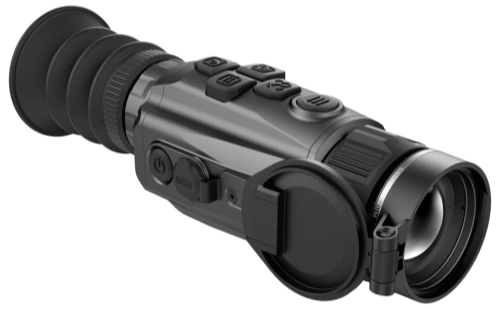
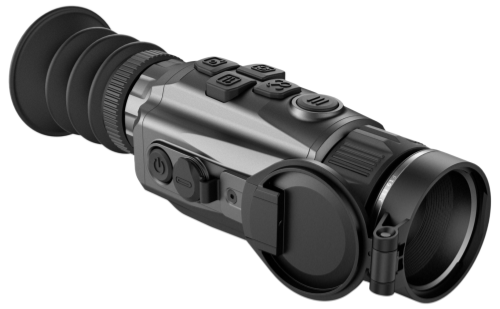
At RIX, our philosophy is straightforward: create optics that provide hunters with a distinct edge. That's why we have outfitted our premium product lines, including the RIX LEAP Series and the RIX TITAN Series, with F0.9 lenses. We believe this sets a new standard for serious hunters who demand the best possible image quality.
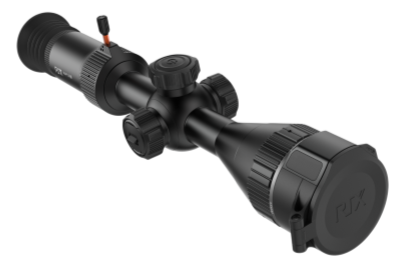
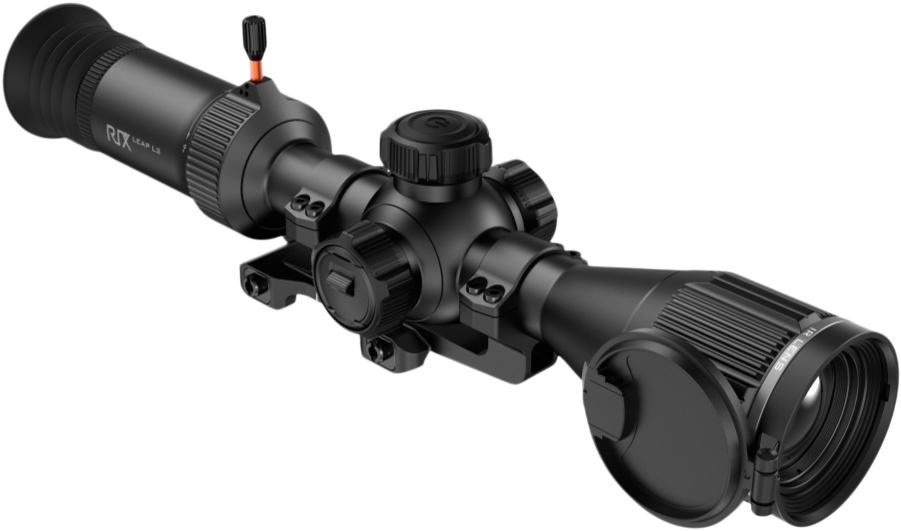
This dedication is particularly evident in our LEAP Series thermal riflescope. The F0.9 lens works in seamless harmony with the LEAP's signature continuous optical zoom. As you zoom in, the lens continuously supplies the sensor with a substantial amount of temperature radiation data, ensuring that the image remains bright and sharp, rather than dark and pixelated.
Look Beyond the Pixels
By understanding the critical role of lens aperture in thermal imaging scope, you can make a more informed choice when selecting your next hunting thermal scope. At RIX, our commitment to the F0.9 standard reflects our dedication to providing hunters with unmatched image clarity and performance in the field. Explore the RIX LEAP and TITAN Series to experience the difference in your next hunt.
Comments